
Why Do Chinese People Place Such Emphasis on Names? — A Name Is a Miniature Poem
Why do Chinese people value their names more than gold? Explained through a familiar Western analogy: a Chinese name is like a person's "personal brand slogan" — a miniature poem. The first lesson in understanding Chinese naming culture.
📝 TL;DR Summary
For Chinese people, a name is far more than just a “label” that distinguishes one person from another. It is a miniature piece of cultural expression that carries family hopes, cultural memory, and personal aspirations. Think of it as your own personal brand slogan—something that follows you throughout life and is spoken every time you introduce yourself. That’s why Chinese families take such care when choosing names. This article will help you understand that deep-seated care in just 8 minutes.
I. A Question to Get You Thinking
Imagine you work as a product manager in Silicon Valley. When preparing to launch a new product, would you just pick a random name for it?
Probably not. You’d hold meetings, check domain availability, conduct trademark searches, and run user research—refining the slogan that will appear on the packaging over and over again. This is because you understand well: A name is spoken thousands of times; it serves as the product’s first impression and its visual face.
The Chinese approach to one’s own name follows exactly this same logic.
The difference lies in the fact that a company can change its name if needed, but your name typically stays with you from birth for the rest of your life. That’s why when a family chooses a name for a child, their dedication is often on par with that of launching a new product.
There’s a popular saying in China:
"Giving a child a thousand pieces of gold is not as good as teaching them a skill; teaching them a skill is not as good as giving them a good name."
—— In other words, leaving a child wealth is less valuable than teaching them a trade; and teaching them a trade is still less important than giving them a thoughtful name.
This saying appears in several works on traditional Chinese naming theory (Fang Lichen, Zhengming Daoxing, China Civil Aviation Press, 2007). It places “giving a good name” above even “passing down wealth.” To many Western readers, this might come as a surprise—why should a name be more important than a box of gold?
The answer lies in how the Chinese view what a name truly is.
II. Core Analogy: A Name = Your “Personal Brand Slogan”
In the West, a first name primarily serves a distinguishing function—helping to identify who someone is. Whether it’s John or David, the difference isn’t significant; what truly matters is the individual themselves.
However, in Chinese culture, a name from the very beginning serves two functions simultaneously:
| Function | In Western Names | In Chinese Names |
|---|---|---|
| Distinguishing function (identifying who this person is) | ✅ Primary purpose | ✅ Also present |
| Expressive function (defining who this person should become) | ❌ Rarely emphasized | ✅ Equally important |
- Function
- Distinguishing function (identifying who this person is)
- In Western Names
- ✅ Primary purpose
- In Chinese Names
- ✅ Also present
- Function
- Expressive function (defining who this person should become)
- In Western Names
- ❌ Rarely emphasized
- In Chinese Names
- ✅ Equally important
This second row highlights the key difference.
When choosing a name for their child, Chinese parents consider more than just whether it sounds pleasant to say. They also think about:
- Does the combination of characters sound nice? (Sound)
- Do they look good when written down? (Form)
- What meaning do they convey? (Meaning)
Only when sound, form, and meaning are combined does a name become truly complete. Fang Lichen, a scholar of traditional Chinese name studies, described it as follows:
Though a name consists of just a few characters, it “contains a person’s essence, energy, and spirit, while also carrying forward their emotions, love, and aspirations.”
—— Zhengming Daoxing
Put in modern terms, this means: A name is a condensed version of one’s self-narrative. It silently communicates to the world what kind of person the family hopes their child will grow into.
Thus, it functions like a Personal Brand Slogan:
- It’s concise: Usually just two or three characters, yet it carries entire wishes within.
- It’s repeated frequently: It’s spoken every time someone introduces themselves, is called upon in class, or receives a package.
- It shapes first impressions: In many situations, people hear your name before they even get to know you as a person.
While Westerners rely on advertising agencies to refine slogans over and over, Chinese parents invest this same care into their children’s names. This is where that sense of “obsession” stems from—it isn’t simply superstition, but rather an attitude of treating a person’s name with the same seriousness as a brand identity.
III. Why Can Two or Three Characters Hold So Much Meaning?
You might wonder: Western slogans rely on a single sentence to resonate with people—like Nike’s Just Do It. With only two or three characters, what can a Chinese name possibly convey?
The answer lies in the characters themselves. This is also why Chinese naming often seems “poetic” to Western readers.
In English, the meaning of a word—such as Grace—depends mainly on established definitions. In contrast, a single Chinese character often preserves a visual form of its own.
Chinese characters originated as pictographic scripts thousands of years ago. From their inception, each character was a depiction of real objects. Take a look at the image below:
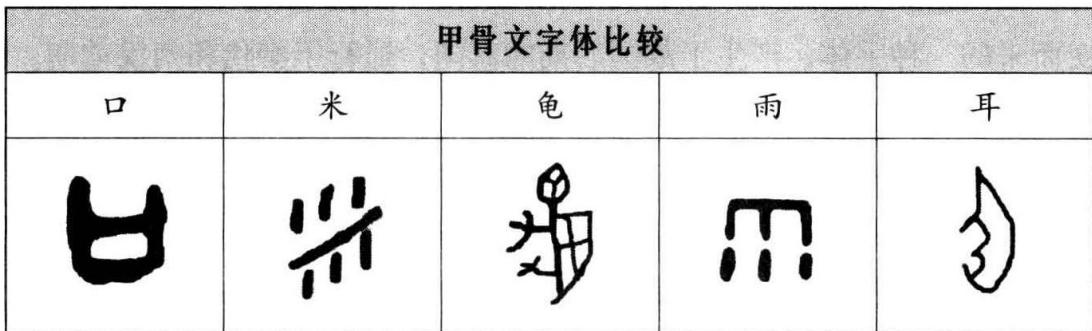
▲ These are the characters 口、米、龟、雨、耳 as written in oracle bone script—the earliest known mature form of writing in China, dating back over 3,000 years. You can clearly see that “口” resembles an open mouth, “龟” looks like a turtle on its side, and “雨” depicts raindrops falling from the sky. They are not merely abstract symbols; they began as little visual forms.
Over thousands of years of evolution, these characters gradually transformed into the familiar regular script (the standard printed font) we use today:
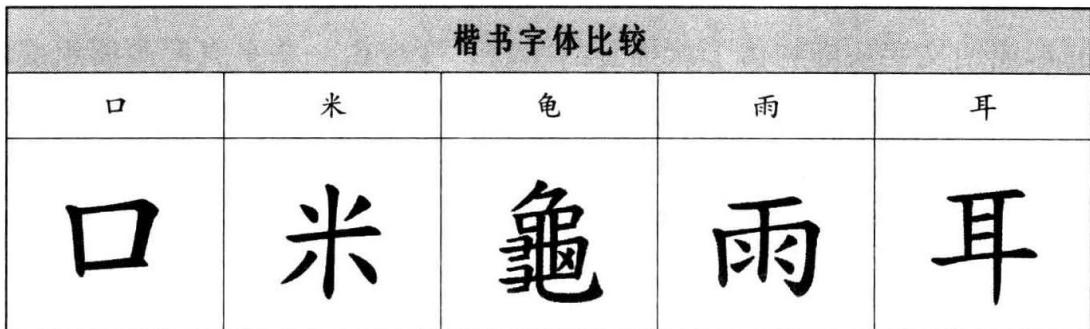
▲ The strokes have become more structured and precise, yet many characters still retain traces of those ancient visual forms.
What does this mean? It means that when you combine several Chinese characters into a name, you are essentially placing multiple images and layers of meaning side by side—much like a poet arranging various imagery in a line.
Here’s a concrete example:
The name 「志明」(Zhì míng)
- 「志」: Aspirations, one’s heart’s desires
- 「明」: Brightness, clarity
Combined, they form a concise life motto—“May you carry aspirations and have a bright future.”
Just two characters, yet they function like a poem compressed into a square shape. This is why Chinese people believe that a name equals a miniature poem. It is not merely a symbol but a written wish.
IV. Back to Reality: How This “Obsession” Shapes Daily Life in China
With the analogy above in mind, it becomes easier to make sense of some seemingly “strange” Chinese practices:
Scene 1: On First Meeting, Chinese People Will Ask, “What’s Your Name?”
This is more than just small talk. While in the West, “What’s your name?” is usually a matter of courtesy, in China it often reflects a genuine desire to get to know someone—after all, one’s name serves as their very first “business card.”
Scene 2: Parents Spend Months Choosing Names for Their Children
Looking up characters in dictionaries, consulting ancient texts, seeking advice from elders, or even hiring professional name consultants—are all common occurrences in many Chinese families. Using our analogy, they aren’t just “selecting labels”; rather, they are carefully refining a slogan that will accompany them throughout their lives.
Scene 3: Some People Change Their Names as Adults
Some Chinese people feel that if a name does not suit them, or carries an inauspicious impression, it may be worth reconsidering at an important life stage. Choosing a name that better fits one’s identity is a bit like refining a product’s brand identity. He Rongzhu, a scholar of traditional Chinese name studies, offers a vivid comparison: just as a person’s innate traits are like a car model leaving the factory, a name is like the road the car will travel on—whether that road is smooth or not affects how smoothly the journey proceeds (He Rongzhu, Textbook of Name Studies, China Materials Publishing House, 2012).
In one sentence, this cultural mindset can be summarized as follows:
In Chinese culture, the idea that “one’s name reflects the person” is not just a figure of speech but a deep-seated belief. A good name is believed to add grace to life, whereas a poorly considered name can feel like a hastily written slogan that never fully works.
💡 Cultural Note: It’s important to remember that this discusses the Chinese attitude toward names and their significance, not the idea that a particular name can determine one’s fate. Different cultures place varying levels of importance on names—there is no hierarchy, only differences. Understanding these differences is key to unlocking the door to Eastern culture.
V. Practical Advice for You
If you’re a foreign friend curious about Chinese names, by the end of this article you’ll already have grasped the most crucial point:
Choosing a Chinese name deserves your serious attention—because it functions as your “personal brand” in the Chinese-speaking world.
A great starting point is to ask yourself three questions:
- What kind of impression do I want this name to give? (Uplifting? Gentle? Steady?) — corresponds to “sound”
- Does it look good when written down? (Are the strokes harmonious?) — corresponds to “form”
- What meaning does it carry? (Am I willing to let it accompany me throughout my life?) — corresponds to “meaning”
Looking for a Chinese name that truly “fits” you? Feel free to try GetHanName—we don’t just “translate” your English name; instead, we combine your preferences to create a unique “personal brand slogan” tailored specifically for you in the Chinese-speaking world.
VI. Frequently Asked Questions (FAQ)
Q1: Do foreigners really need a Chinese name?
Strictly speaking, it’s not that they “need” one, but rather having one makes communication smoother. In a Chinese-speaking environment, a Chinese name with positive connotations can instantly bridge the gap between people—much like learning someone’s “social language” on your own initiative.
Q2: Are all Chinese names made up of two characters?
Not necessarily. The given name is usually one or two characters, though there are also three-character or longer names; when combined with the surname, the full name typically consists of two to four Chinese characters. Two or three characters is the most common setup, as it’s easier to remember and write.
Q3: Do Chinese people truly believe that names influence fate?
This is a long-standing concept in traditional Chinese culture, often described as traditional Chinese name studies or xingmingxue. People accept it to varying degrees. For the vast majority, however, choosing a name carefully is more of a cultural practice and an expression of good wishes than a claim that a name determines fate.
Q4: Can’t I just transliterate my English name directly to use as a Chinese name?
It’s possible, but the results are often mediocre. Pure transliteration (for example, writing John as “约翰”) can only be considered a “translation” and usually lacks the harmony of sound, form, and meaning that defines a proper Chinese name. To come up with a meaningful, pleasant, and easy-to-remember name typically requires some extra creativity.
VII. Further Reading
- 📖 The Structure of Chinese Names: Surname + Given Name — Simpler Than You Think — Curious about how Chinese names are put together? This article is perfect for you.
- 📖 “What Does Your Name Mean?” — A Question Everyone Asks in China When Meeting — Why is this question so significant in China?
- 📖 7 Golden Rules for Foreigners Choosing Chinese Names — Planning to pick out a name for yourself? Start by reading this practical guide.
References
- Fang Lichen, Zhengming Daoxing, China Civil Aviation Press, 2007.
- He Rongzhu, Textbook of Name Studies, China Materials Publishing House, 2012.
- The illustrations used in this article come from the charts showing the evolution of Chinese character scripts (comparison between oracle bone script and regular script) included in the aforementioned books.
This article is originally published on the GetHanName blog at gethanname.com. Please contact us if you would like to reproduce it.
Related articles
What does your name mean? — A question everyone asks when meeting in China
In China, “What does your name mean?” is not just small talk but a question that truly opens up a conversation. To explain it with an analogy familiar to Westerners: a Chinese name functions as a “social icebreaker.” Lesson three in understanding Chinese naming culture.
The structure of Chinese names: surname + given name, simpler than you think
How Are Chinese Names Spelled? Explained with a Simple Analogy: The surname is your “family brand,” and the given name is your “personal signature.” The surname comes first, followed by the given name, usually two to four characters—that’s all there is to it.